










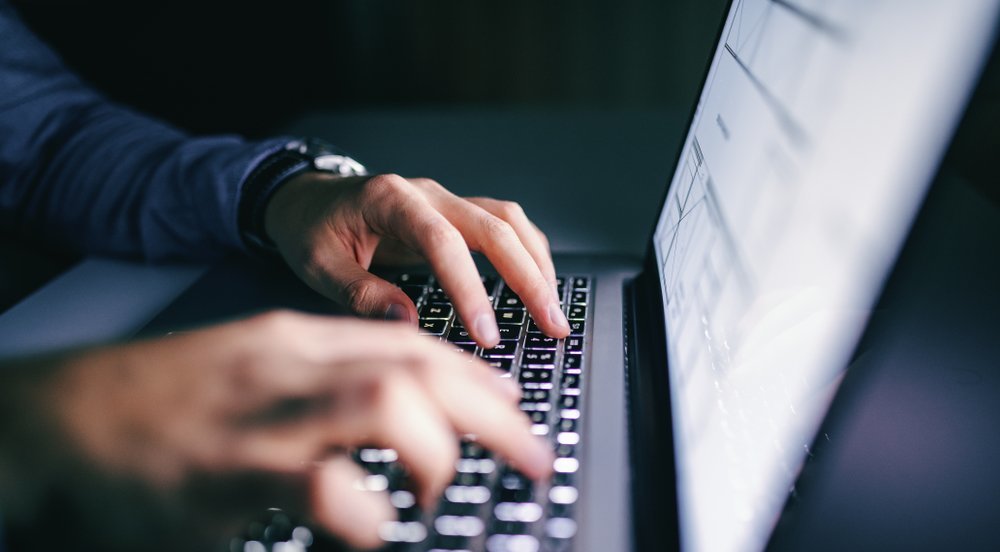
Eglė (name changed), a freelance content writer, agreed to anonymously share her experience. According to her, she never really considered that computer work could negatively affect her health.
“It seemed like if the job wasn’t physically demanding, it couldn’t really be dangerous,” she says.
From eye fatigue to a serious diagnosis
As a freelance writer, Eglė spends most of her day in front of a computer. Her work revolves around writing, editing, and researching information for various clients — from pharmaceutical and healthcare companies to travel, lifestyle, and business projects.
“One day I’m analyzing medical articles, and the next I’m writing lighter content for online portals or social media,” she explains.
Because her workload is varied and requires constantly learning about new topics, Eglė spends most of her day researching, writing, and fact-checking.
“Since I work freelance, I choose my own clients. Sometimes I overestimate how much I can handle and take on too much work. Once I accept projects, I want everything completed perfectly and on time, so I end up spending far more time at the computer than I originally planned. Usually it’s around 8–10 hours a day, and sometimes I work weekends too,” she says.
Although lunch breaks were technically part of her schedule, reality often looked different.
“When you work from home, you don’t even notice how quickly time passes. Sometimes I’d just grab a quick snack and immediately go back to work. There were days when I became so absorbed in tasks that I completely forgot to eat. I did take breaks, but rarely for a full hour — usually 30 minutes or even less. It felt like using that time for work was more important,” Eglė recalls.
For a long time, she did not experience anything alarming — only what she considered normal eye fatigue. Her eyes felt dry and irritated, and her vision became blurry in the evenings.
“I thought it was completely normal since I spent the whole day looking at a screen,” she says.
Because of this, she did not change her working habits or take more frequent breaks.
Several months later, the situation worsened. Eglė began noticing flashes of light, flickering vision, and floating spots of different shapes and sizes.
“At first it only happened occasionally, but later it became more frequent. I started worrying because it no longer felt like ordinary tiredness. There were moments when I had to stop working just to understand what was happening with my eyesight. It was unsettling — honestly, a little frightening. Even though it affected my work and made it harder to concentrate, I still tried to finish everything on time,” she says.
After these symptoms appeared, Eglė decided not to delay any longer and visited an ophthalmologist. During the appointment, she learned that her symptoms were related to digital eye strain caused by prolonged screen exposure and insufficient rest for her eyes.
The doctor’s recommendations helped her better understand the problem and make important changes. Although she still works in the same profession, Eglė now approaches her health very differently. She takes regular breaks, pays closer attention to her work environment, looks away from the screen more often, and monitors her wellbeing carefully.
“This experience taught me one thing — you can’t ignore warning signs,” she admits.
Proper computer work habits are a necessity, not a choice
This story clearly shows that sedentary work is not as harmless as it may appear. Long hours in front of screens, skipped breaks, and the habit of ignoring early symptoms can eventually lead to serious health issues.
The State Labour Inspectorate emphasizes that employee safety is important even in office-based and computer-related work. Even seemingly minor symptoms such as eye fatigue, irritation, or blurred vision should not be ignored.
One of the biggest mistakes is assuming that the problem “will go away on its own.” As this case demonstrates, delaying action can become costly — the longer symptoms are ignored, the higher the risk of more serious complications.
Specialists recommend several simple habits that may help reduce eye strain and protect long-term eye health:
- follow the 20-20-20 rule: every 20 minutes, look at something in the distance for at least 20 seconds;
- take 5–10 minute screen-free breaks every 1–2 hours;
- keep the monitor at eye level and approximately 50–70 cm away;
- blink frequently to prevent dry eyes;
- perform simple eye exercises, such as moving the eyes side to side, up and down, blinking firmly, and changing focus distance;
- if symptoms such as flashing lights, flickering vision, or floating spots appear, consult a specialist.
For more information or assistance, employees and employers can contact the State Labour Inspectorate:
- Phone: +370 5213 9772
- Email: [email protected]
More information: VDI Lietuva.
Sužinokite vaiko vardo reikšmę ir kilmę
Daugiau nei 4000 vardų reikšmių rasite tevu-darzelis.lt


